If you’ve been looking into replacing missing teeth with dental implants, you’ve probably heard that your jawbone is essential. In order for these titanium screws to secure in your jaw, you need enough bone to support them. However, what you may not know is that your sinuses play a role in your eligibility for implant treatment as well. After losing teeth, your bone will gradually decrease in mass and volume. Unfortunately, as your jawbone thins, your sinuses may drop into that now-empty space, interfering with your ability to house dental implants. When your sinuses get in the way of restoring your smile, only a sinus lift can help put dental implant treatment back on the table.
What Is a Sinus Lift?
Your sinuses are pockets of air in your skull that rest on either side of your nose. When you breathe in, your sinuses warm, humidify, and filter air, protecting your lungs. But when your upper jawbone starts to deteriorate thanks to tooth loss, it’s easy for your sinuses to droop downwards, making the space between your gums and sinuses thinner.
Dental implants are relatively long screws that need ample bone for support. When replacing upper teeth, we have to make sure the sinuses aren’t at risk of being punctured by the implant! To do this, we use a sinus lift procedure.
In general, there are two types of sinus lifts:
- Direct sinus lifts: When you’ve lost significant bone structure, you may require a direct sinus lift. This procedure involves making an opening in your upper jaw to access your sinuses directly. Then, our team will carefully lift the membrane upwards using special dental tools and fill in the remaining space with bone grafting material. Over time, this material helps rebuild lost bone, creating a strong foundation for dental implants.
-
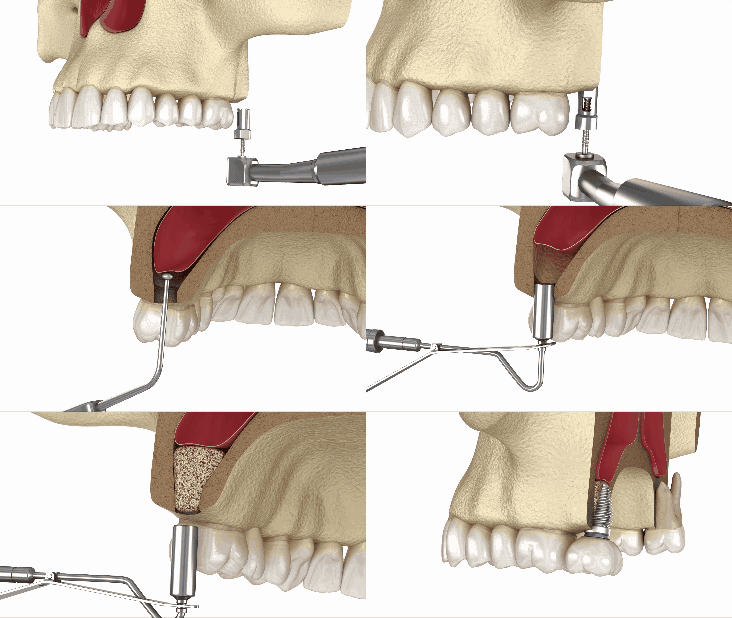
An indirect sinus lift is less invasive, allowing for less discomfort and a faster recovery. Indirect sinus lifts: For patients with less severe bone loss, we often use an indirect method. Instead of making an incision in the side of your jaw, we create an opening in your gum and bone from below, like where the future implant will go. Our team then uses the same special tools to carefully lift your membrane and rebuild your bone with bone grafting.
Which sinus lift you need depends mainly on the amount of bone loss you’ve experienced. However, the type of implant you’re getting can also influence the procedure.
Do Mini Implants Require Sinus Lifts?
Mini dental implants are small titanium posts, about half the size of conventional implants. Thanks to their smaller diameter, these implants need much less bone for support. For those with missing bone structure, mini implants may even allow them to skip bone or sinus augmentation!
Instead, we can place mini implants directly in your jaw without waiting for a sinus lift.
 Even if you do need a sinus lift, mini implants make the process much easier. Typically, we use an indirect sinus lift, which is less invasive and requires less healing time. Additionally, we may be able to place a mini implant the same day we perform an indirect sinus lift!
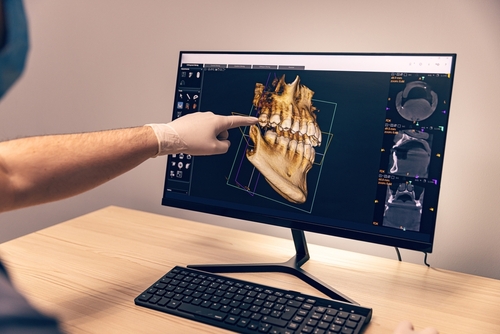
The only way to know for sure what your smile needs is to book a free consultation at Healthy Habit Dental Care. Here, our doctors will take a 3D digital scan of your smile and jaw to assess your eligibility. If you need a sinus lift procedure, we will discuss your options and create a custom treatment plan with your interests in mind.
Many patients can skip the sinus lift with mini implants and enjoy a faster, less invasive procedure.
Skip the Sinus Lift With Mini Dental Implants in Temecula, CA
Dental implant treatment needs both a strong jawbone and a thick layer of bone between your implants and your sinuses. When your sinuses get in the way of an implant procedure, you’ll need a sinus lift to put things back on track. Fortunately, mini dental implants often allow patients to skip sinus lifts and enjoy a restored smile sooner.
Book a free consultation with us in Temecula, CA, to determine whether you need a sinus lift before restoring your smile.
Follow Healthy Habit Dental Care on Facebook and Instagram to learn more about the mini implant placement process.